








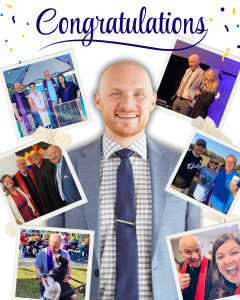
 Today I wanted our devotion to focus on celebration! Mostly today, I wanted to celebrate Pastor Philip, my colleague in ministry and friend. It has been on my heart recently to do a better job at celebrating the work of this church and the ministry that we participate in and so today I want to tell you a little more about the work of Pastor Philip and the new chapter he is entering.
Back in early 2021, as we were still navigating COVID, we had some amazing pastors leaving all for good reasons. One pastor was heading to Lakeland, to pastor his own church, another pastor was heading to Melbourne to work with a church that was near and dear to his family’s heart, another pastor was leaving to follow his wife to medical school in North Carolina. And this was all happening at the same time. That left Pastor David, Pastor Craig and myself. In the summer of 2021, Pastor David had an already scheduled and approved three month renewal leave and I was left in charge. But before he left, Craig and I got to meet, Philip, a pastor from another denomination that had relocated here with his wife Stacey and son, Elijah. Through God’s provision and the connections in the United Methodist church, Philip came to First United Methodist Church at a time that was in the middle of transition and a bit of grief, and he brought joy, positivity and a desire to love the people. I didn’t realize it then, but Philip was the gift we were waiting for as a church and as a Pastoral Team.
If you didn’t know, Pastor Philip, came to us from another denomination, and he has been an ordained elder in the Church of the Nazarene for 18 years. I tell you this because this has been a momentous time in the lives of the Allred family. This past month, Philip officially closed the chapter with this denomination of his childhood and early adulthood and come this Saturday, June 7th, he will be licensed as a local pastor at the Florida Annual Conference in Lakeland. If you want to join us in watching this holy service take place and to cheer Pastor Philip on from the TV or computer screen, as he is blessed to continue his work in ministry as a Licensed Local Pastor, we have included that link below.
I have been a United Methodist all my life, but my ordination process still took seven years. I say that because I want to express what a big part of Pastor Philip’s life will now be his licensing and commissioning work over the next few years. Not only did I have three years of a Master’s of Divinity degree, three years of a Probationary Period to train and learn, and two years of the response, “No, not yet,” from the Board of Ordained ministry, but I grew up as a cradle United Methodist. This has always been my family; you have always been my people. And Philip has the same qualifications, education and far more years of experience as an ordained pastor in our sister denomination. And in a way, he is starting over again. I imagine this took a lot of faith for him and Stacey to decide on, but I know that our God is faithful and I know that our God is good.
I want you to celebrate with me this big step that the Allreds are embracing this weekend and to celebrate with us and this church as we welcome another licensed local pastor of the United Methodist tradition into our embrace. Our church has had a long history of raising up pastors, teaching them and stretching them. We have had a rich history of young folks called in the ministry under our care and love. And on Saturday, we have done it again, with God’s help and I wanted you to know just how important this is.
I will close with this Scripture from Colossians, because I think it embodies the kind of person and the kind of pastor that Philip is to us. We often joke on staff about his energy and his love of singing, (trust me, Pastor Leah and I each share a work wall with him). But Philip is a force of joy, positivity, no fluff or fragile ego and one of empathy and life-long learning. I am thankful to be his colleague in ministry and I am celebrating all that God has done and will continue to do in his and his family’s life moving forward.
Colossians 3 tells us about being alive in Christ and then gives us this model with which to live with one another.
12 Therefore, as God’s chosen people, holy and dearly loved, clothe yourselves with compassion, kindness, humility, gentleness and patience. 13 Bear with each other and forgive one another if any of you has a grievance against someone. Forgive as the Lord forgave you.14 And over all these virtues put on love, which binds them all together in perfect unity.
15 Let the peace of Christ rule in your hearts, since as members of one body you were called to peace. And be thankful. 16 Let the message of Christ dwell among you richly as you teach and admonish one another with all wisdom through psalms, hymns, and songs from the Spirit, singing to God with gratitude in your hearts. 17 And whatever you do,whether in word or deed, do it all in the name of the Lord Jesus, giving thanks to God the Father through him.
Please join me in watching and celebrating Pastor Philip’s licensing service this Saturday, June 7th at 10:30am. The link to live stream is below.
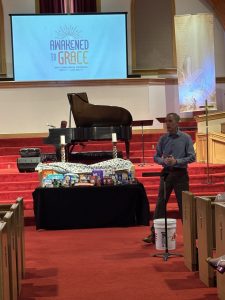
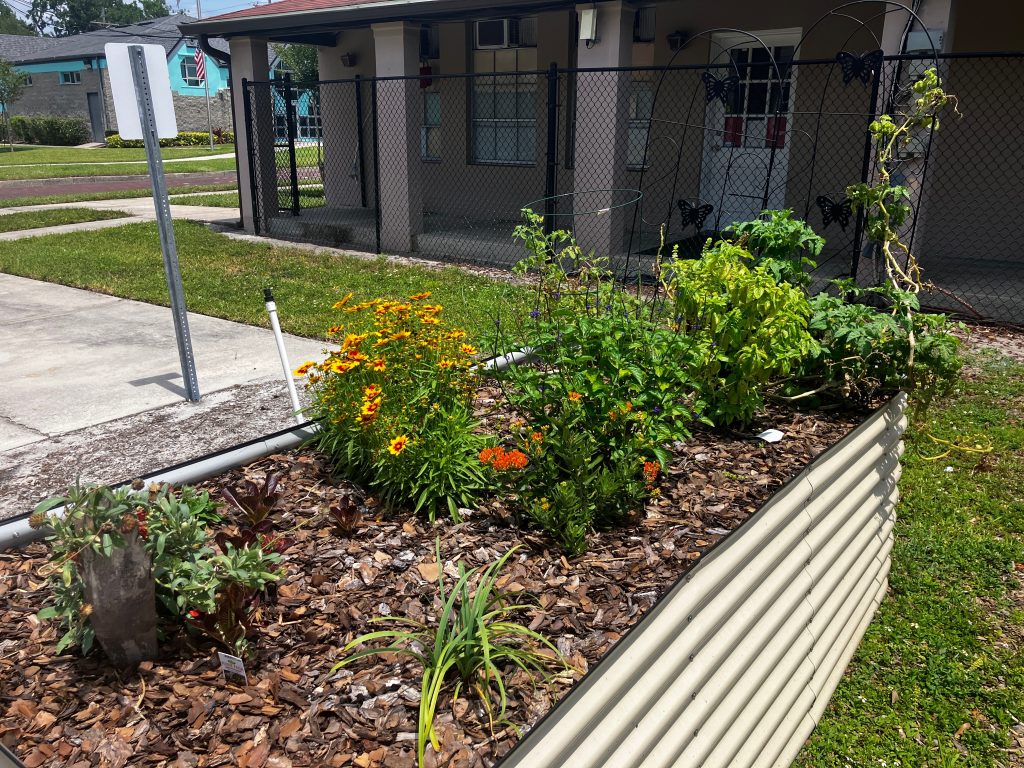
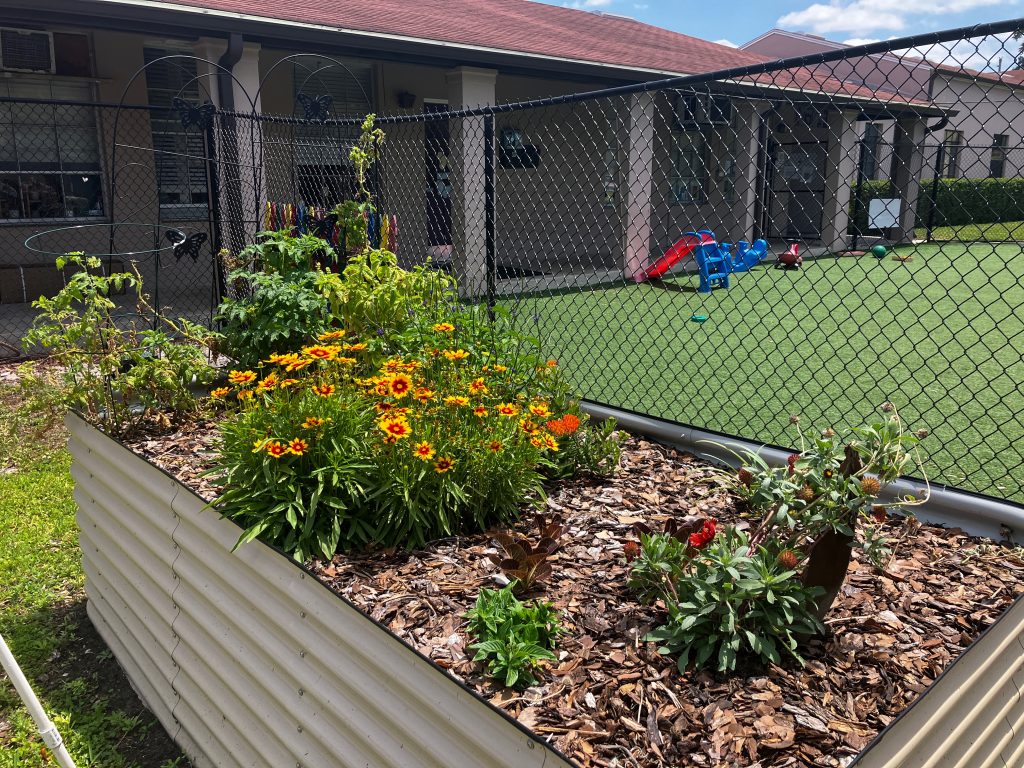
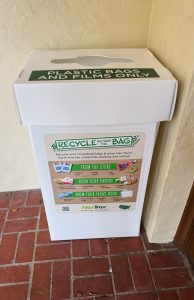 What if disregarded junk, had a purpose? I ask you this question this morning because not only does it connect to the sermon on Sunday, but an initiative shared between the church and one of its preschools. Maybe like me, you were raised to think that disregarded junk was not to be messed with, was to be forgotten about, left in the trash for someone else to handle. But in our story from Jonah on Sunday, we learned that God cares about all. God cares about the people, the places and even the animals that are often forgotten about. Remember Jonah and how much he despised the Ninevites? Remember how he thought they were trash and not worth his time? Remember how he was more upset by the withering plant that brought him shade than the over hundred and twenty thousand people who repented and turned from their wicked ways! Do you recall how backwards his priorities really were?