








First United Methodist Church

Service Times

9am Contemporary | 11am Traditional

Lenten Devotion: Confession- Naming What We Carry

Romans 4:1–5, 13–17

Romans 4 makes Paul’s argument unmistakable. Abraham was not made righteous because he performed well. He trusted God. And that trust was counted as righteousness. The promise rested on grace, not achievement.

That emphasis matters deeply for us as Wesleyans.

John Wesley insisted that grace is always first. Prevenient grace goes before us. Justifying grace reconciles us. Sanctifying grace continues to transform us. At every stage of the Christian life, grace is the foundation. We do not initiate salvation. God does.

Yet many people still live as though Jesus is keeping score.

We imagine a cosmic ledger. Good deeds on one side. Failures on the other. We hope the balance tips in our favor. It is a deeply ingrained religious instinct.

The television show The Good Place built its entire premise on that idea. (SPOILER WARNING) In the show’s fictional afterlife, every action earns positive or negative points. Buy flowers for your grandmother, you gain points. Buy the wrong tomatoes and indirectly support exploitative labor practices, you lose points. The system tracks everything.

But as the show unfolds, they discover something important. The scoring system is fundamentally flawed. Modern life is too complex. Every action is entangled in systems of harm no one fully understands. Even well-intentioned choices carry unintended consequences. No one can accumulate enough points to qualify. So, no one is being allowed into the “Good Place.” The system collapses under its own logic.

That fictional insight reflects a real theological truth. If salvation depends on moral point totals, no one stands secure. Human life is too complicated. Sin is too pervasive. Motives are too mixed.

Paul’s argument in Romans 4 dismantles that ledger approach. “To one who works, wages are owed. But to one who trusts God who justifies the ungodly, faith is counted as righteousness.” God does not operate a cosmic scoreboard. God operates through grace.

For us as Wesleyans, grace is the better way.

We are not Christians so that we can earn a place in heaven. We are Christians because Christ has already loved us. We respond to grace. We trust grace. We are transformed by grace.

And our works matter. Wesley never minimized holiness. But our obedience does not flow from fear of disqualification. It flows from love and gratitude. We serve not to secure acceptance but because we have already been embraced.

This reshapes our confession. We do not confess to adjust our score. We confess because we trust that grace is real. We name what we carry because we believe God’s mercy is deeper than our failure.

So, if you find yourself imagining a divine scoreboard, pause. That is not Paul’s gospel. That is not Wesley’s theology.

The promise rests on grace.

We live, serve, repent, forgive, and love not out of obligation, but out of thankfulness for the love of Christ. And that love is never earned. It is given.

Lenten Devotion: Reflection and Redirection

Sisters and Brothers,

As we begin the journey of Lent, you will have an opportunity to reflect on a Scripture and on a Hymn that ties us back to this holy season of reflection and redirection.

Our Scripture today is Psalm 25: 1-11 NIV

In you, Lord my God,
    I put my trust.

I trust in you;
    do not let me be put to shame,
    nor let my enemies triumph over me.
No one who hopes in you
    will ever be put to shame,
but shame will come on those
    who are treacherous without cause.

Show me your ways, Lord,
    teach me your paths.
Guide me in your truth and teach me,
    for you are God my Savior,
    and my hope is in you all day long.
Remember, Lord, your great mercy and love,
    for they are from of old.
Do not remember the sins of my youth
    and my rebellious ways;
according to your love remember me,
    for you, Lord, are good.

Good and upright is the Lord;
therefore he instructs sinners in his ways.
He guides the humble in what is right
and teaches them his way.
10 All the ways of the Lord are loving and faithful
toward those who keep the demands of his covenant.
11 For the sake of your name, Lord,
forgive my iniquity, though it is great.

Now read it again in another translation. After reading it twice, what word or phrase stands out to you? What word or image gives you hope? What phrase causes you discomfort?

For me, I have been chewing on this idea of humility. Last week, a leader in our church asked us a deep question. He asked, can a leader be humble and successful? And I have been thinking about that ever since. I feel how you answer that in part is how you define success. And humility always points me back to Jesus. Verse 9 says, “He guides the humble in what is right and teaches them his way.” In order to be humble, you have to adjust your perspective in how you see yourself and how you see the world. If you come before God with the heart posture to learn and to obey, God is honored in that humility and imparts wisdom and clarity. One of the hymns I return to time and time again in my own worship and reflection time is “Be Thou My Vision.” I am choosing today to focus on the words of verse four which speak to me about humility.

“Riches I heed not, nor man’s empty praise;

Thou mine inheritance, now and always.

Thou and thou only, first in my heart,

High King of Heaven, my treasure thou art.”

As we begin this Lenten Journey together, may we have the heart posture of humility and may God be the treasure we seek first. The world needs more leaders that are humble and have their eyes fixed on Jesus.

AMEN

Devotion: Rise, Together Starts Sunday!

Rooted in Ephesians 4:1–7, 11–16

This Sunday, we begin Rise Together, a new season in the life of our church. It’s more than a campaign; it’s a calling to move forward together in faith, unity, and love. Before continuing with this devotional and in preparation for Pastor Rachels’ sermon on Sunday, please read Ephesians 4 now.

We begin with these words from Ephesians 4, where Paul urges the church in Ephesus to “live a life worthy of the calling you have received.” He was writing to a diverse, often divided community. Ephesus was a bustling, multicultural city. The early church was made up of Jews and Gentiles, people from different backgrounds, cultures, and convictions. Unity wasn’t easy. It took effort. It still does.

Paul goes on to say, “Make every effort to keep the unity of the Spirit through the bond of peace.”

Every effort.

Not to create uniformity. Not to erase differences. But to remember that we belong to one another in Christ. We are called to something deeper than agreement, we are called to love one another.

As Rise Together begins, we recognize that we are not all the same. We come from different life experiences. We have different passions, perspectives, and resources. Some of us go to the contemporary service and some of us attend the traditional service. Some focus on a certain Bible Study class while others focus on a mission or ministry of the church. And yet, we are one body.

This campaign is about more than raising financial commitments. It’s about rising in our calling to be the Church: a community of grace, generosity, and growth. A people rooted in love, joined and held together, building one another up.

This Sunday, is going to be a very special Sunday and we hope you will make “every effort” to be in Worship with us. We invite you to come ready. Ready to listen. Ready to hope. Ready to rise.

Let’s pray:
God of unity and grace, prepare our hearts as we enter this new season. Teach us how to grow together in love. Let our giving be generous, our spirits be open, and our eyes fixed on Christ, who is building us into one body. Amen.

Reflection Questions: What stands out to you from Ephesians 4? Where do you see signs of “unity in diversity” in our church?

Devotion: This Is Our Legacy

In this season of life, I have watched as my hard-working parents retire after many faithful years of service. My mom retired almost 10 years ago from teaching in the Public School classroom and I am so proud of all of the lives she has influenced and shaped over her 42 years in education. In preparation for her retirement, my sisters and I got the class lists from almost 40 years of teaching and wrote each of the names of the students she had taught on a colorful slip of paper and one by one, we stapled them into a paper chain. We used that to decorate our church fellowship hall when we had her surprise retirement party years ago. Now my sisters and I are trying something similar for my dad. You may or may not know that my dad has been an architect for almost 50 years and he owns and runs his own architecture firm in Daytona Beach. My sisters and I are working on a final project that would feature over his 300 projects from his career to again celebrate his work as he nears his retirement later this year.

I started thinking about all of this over the last few days as I thought about Legacy. I spend some time talking about and encouraging a well-lived Legacy as I have assumed the Chair at Residing Hope (formerly known as the Florida United Methodist Children’s Home) and at those Director Meetings, we talk a lot about leaving a lasting legacy. For instance, we ask the Board, what kind of Legacy do we want to leave for the youth that come through our gate? How do we want to help transform the lives of the families who benefit from the care, counseling, therapy and spiritual life at Residing Hope? What kind of legacy will we leave?

As followers of Jesus, we aren’t often encouraged to think about getting recognized or having our names placed on plagues or a scholarship fund, but, bolstered by humility, we are asked by Jesus, over and over again to point people back to God. As a person who is with Jesus, becoming like Jesus and helping others to know Him, our biggest legacy will be loving God with all of our heart, soul, mind and strength and loving our neighbor as we love ourselves. This is our Legacy. But what does that look like in action? What does a lived legacy of loving God and neighbor look like in today’s world?

Sometimes, leaving a legacy is offering a place of grace and safety for those that aren’t comfortable anywhere else. Maybe you have been called to hold sacred space for individuals that have been shunned or misguided by organized religion; who need a safe space to belong and to be loved. Maybe you have been called to leave a legacy of service to the world through justice and mercy, through feeding hunger bellies or empowering hungry minds. Maybe you have been called to leave a legacy with your wisdom as you shepherd new parents or marriages in conflict. It could be that you are called to love the youth, tutor students, protect refugees, feed the homeless or fight for more equal legislation. Or it could be that you have been called to leave a legacy of bettering our community and equipping it for changing times.

I share all of this because we are beginning our Capital Campaign as you know and you will be hearing about Legacy a lot over these next few weeks. I wanted to start the conversation to say that many of you have already begun to leave your legacy and it is holy and it is good. Not all legacy is connected to money, so much of it is connected to our relationships. I invite you and your family to talk through how you have already begun to leave a legacy for people in the name of Jesus here in Central Florida and then invite the Holy Spirit to show you how that Legacy can grow and expand through generosity in ways you may have not even yet acknowledged. As one of your pastors, I know what a generous church this is in spirit and in means and I look forward to seeing how we will work together to help others come to know and love Jesus Christ through the legacies we build on now as one body.

Devotion: Christ Our Peace

“For he is our peace; in his flesh he has made both into one and has broken down the dividing wall, that is, the hostility between us,” -Ephesians‬ ‭2‬:‭14‬ ‭NRSVUE‬‬

Last week, I had the opportunity to speak with the Tuesday Morning Men’s Bible Study, and we talked about the meaning of shalom. We had such a great conversation I thought I would share it with you all as well. In the Old Testament, that word means so much more than what we usually think of as peace. It means wholeness, completeness, restoration. Job could say his tents were in shalom because nothing was missing (Job 5:24). David asked about his brothers’ shalom while they were at war (1 Samuel 17:22–23). Shalom isn’t just calm feelings, safety, or the absence of violence, it’s a life made whole!

Isaiah longed for the day when a ruler, the Prince of Peace, would come to bring unending shalom(Isaiah 9:6–7). When Jesus was born, the angels announced his arrival as the coming of eirene, peace in Greek (Luke 2:14). Jesus told his disciples, “My peace I give to you” (John 14:27). Through his life, death, and resurrection, he reconciled us to God and tore down the barriers of hostility that keep people apart.

This kind of peace isn’t passive. It’s active. Paul urged the church to hold unity together with humility, gentleness, patience, and love. Shalom takes effort, it means restoring what’s broken, healing what’s divided, reconciling what’s been estranged.

And yet, we know how far our world is from this peace. Every day we’re faced with mass shootings, political violence, and language that dehumanizes and divides. In the past decade, injuries and deaths from shootings have surged. Leaders and everyday people alike have been targeted with hostility. As Rev. Gary Mason reminds us, “Dehumanization precedes genocide.” When we demonize others, we plant seeds that destroy peace.

Our calling as Christians is clear: not to pull back in despair, not to join in the rhetoric of division, but to live as peacemakers. To carry Christ’s shalom into our homes, our communities, and our public life. To ask not only what’s broken but also how can we help restore this world?

Prayer:

Prince of Peace, our world is fractured, and too often our words and actions add to the division. Forgive us for the times we’ve demonized others or turned away from what is broken. Teach us your way of peace. Make us people of shalom, humble, gentle, patient, and loving. Heal our communities, our nation, and our world, through Christ our Peace. 

Amen.

Devotion: INUA Graduation Trip Part 3

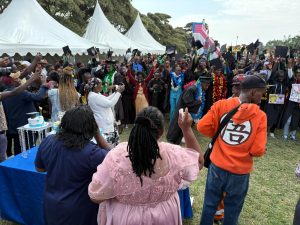
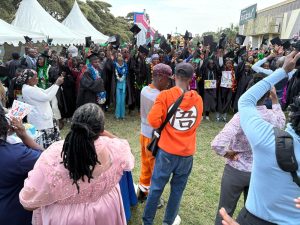
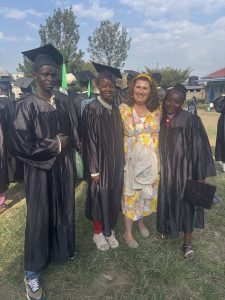
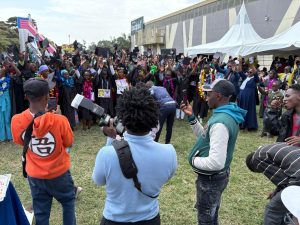
Karibu Tena means welcome back or welcome home! The majority of our team from the United States in now home safe after an incredible trip to Kenya. This is my third and final devotion on our trip to Naivasha because I wanted to share with you the joy of graduation and the hope of transformed lives. If you read the last two devotions, you know that there were approximately 160 youth who had graduated the INUA empowerment program for Cycle 6 and they are now off and running towards employment in their fields. Many of the youth I met during my week in Naivasha shared that they are already working or already have businesses of their own. Many of these youth already began earning an income to help their younger siblings and loved ones and a few have even been able to hire other workers as their businesses grows.

As much as this is worth celebrating, employment isn’t the only reason why this program exists, ultimately this ministry is about transformational leadership. I saw this first hand on my visit with Zone 3, at Mt. Zion United Methodist Church when I heard a devotion by Simon, one of the youth studying mechanical installation. He read the story of David and Goliath and talked about how these youth have overcome the “Goliaths” in their own lives to finish this program and to graduate as they did on Friday, September 5th. But the part of the story that I had never paid much attention to over the years was the part of the story when David shows up on the battlefield and his older brothers admonish him asking him why he isn’t back home caring for the sheep of Jesse’s pasture (1 Samuel 17:28). In other words, why aren’t you doing what you have always done, you are not meant for more than shepherding, stay in your lane and get back to your role in the family. This part of the story hit me because I know that many of the youth in Naivasha have been made to feel like this at some point in their lives by family members or friends who don’t see their potential. Maybe it is because of their status in life, what their past looked like or their lack of educational opportunities. But the same question that Davd’s brothers asked him on the battlefield were asked of some of our youth as well. And that they should just be happy to be “watching the sheep.”

But the ministry of the Kenyan staff, and our church, and our sister churches and the support of so many have shown these youth that they are meant for so much more. That the voices of their past that tell them to stay in their place are quieted when the voice of the Living God calls them to new heights, new opportunities, new challenges and ultimately to live a transformed life. This is what INUA is all about and it was in honor to see it in action. And I am thankful for the work of this church, First United Methodist of Ormond Beach, Cornerstone United Methodist Church in Naples and all of the Kenyan staff and partners for making it so. While we celebrate these transformed lives we know that there are many challenges they will still face. Kenya’s overall unemployment rate was estimated at 5.43% in 2024 and there are other challenges these youth will have to overcomes. We ask that you continue to pray for these youth, their mentors, their neighborhood leaders and their families as they begin to live into their transformed lives because there is still more work to do. Enjoy looking through these pictures to see the joy, the sense of accomplishment and their newfound hope as our 148 youth from Cycle 6 begin to take on the Goliaths in their own lives and live as transformed people through the hope of Jesus Christ!

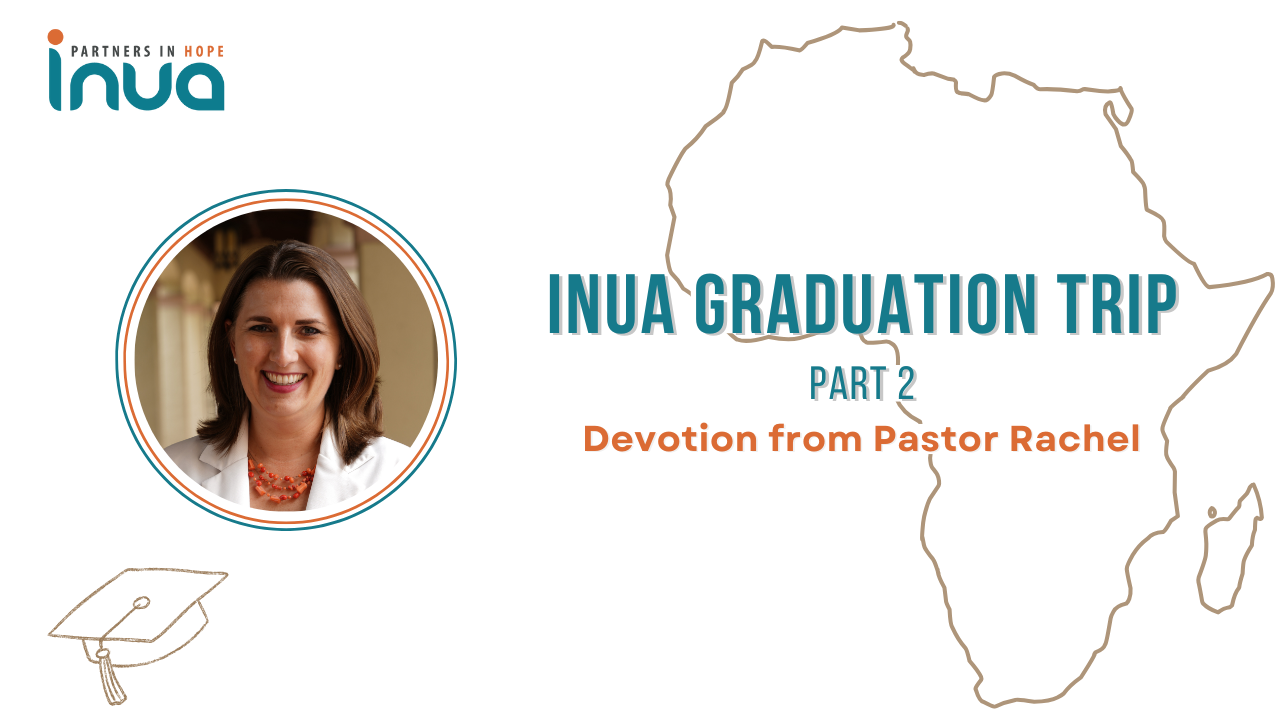
Devotion: INUA Graduation Trip Part 2

Habari! And greetings brothers and sisters from Kenya. As promised, I wanted to share with you a bit about all that our Team has been up to as we prepare for the INUA Graduation on Friday, September 5th.

After arriving late on Friday afternoon, we have seen a lot and celebrated even more. After arriving in Nairobi, we went to a local fish hatchery and picked up the 1,000 baby tilapia fish that will be at the IATEC farm and will help produce fertilizer through fish farming. After meeting the INUA staff for dinner we rested after 34 hours of straight travel. On Saturday, we were lucky enough to go to Nakuru for a Safari through the National Park and I made friends with a Giraffe. On Saturday, we met the new GMF (Global Missions Fellow) from Ghana named Nick and heard about how he will bless the INUA youth for the next two years while being a mentor to them.

On Sunday, I experienced joy like no other while worshipping at Trinity United Methodist Church through singing, clapping, dancing, prayer, testimonies and the spoken Word. I was privileged to preach and can say that the Joy of the Lord is in this place! We ended the day at the farm that has been planned for and prayed over for almost 10 years. What an incredible property and potential that this place has for the Longonot community and its surrounding areas. We met the “Fabulous Four” Jane, Phyllis, Sentry and Paul and they were proud to show us around and share all of their knowledge and pride from what they had built together.

The following day on Monday we hit the ground running and met with four neighborhoods back at Trinity United Methodist Church. We met the graduating youth from neighborhoods in Zone 1: Pipeline, Kyoto, Industrial and Service Site. We met mechanics, barbers, electrical engineers, cooks and hair dressers. We visited a few of the INUA alumni and the graduates that are already working and owning their own businesses. We were thankful to distribute two new toothbrushes to each graduate and do a life skills training video on Dental Hygiene thanks to Dr. Jim Flatley.

On Tuesday, we visited two more neighborhoods and connected with more of the graduates. The first neighborhood in the morning was Mirera and they have their team meetings in Sanctuary UMC, a tiny blue church in the middle of a neighborhood that you can only get to on dirt roads. These graduates had made beautiful necklaces and bracelets as their Team project, and they were proud to show us their work, and we were privileged to buy some and support their efforts. We visited one graduate’s business in that neighborhood where she makes chips (fries), choma and chipati as a hospitality student. And then we stopped on the side of the freeway and had a picnic lunch with the INUA Staff. The final stop of the day was in the Longonot neighborhood which is closest to the farm. This is a new neighborhood and the first cycle that these youth have participated in and while they were shy and quiet, they were so proud of all of the work they had done. We met in the Chief’s Office (like a mayor’s office, but this structure is tribal) and we heard some prayers, some worship and some hopes that these youth have for their futures.

I have seen God so much over these last five days, there is not enough time to tell you all of the ways. But I will say that I see God most through the joy of these youth who have encountered Jesus through this program. Many of them spoke of their faith, their hope, their promise of a new life or new possibilities and every single youth I talked to shared their thanks for all of you who have written letters or supported them with prayers. I am privileged to be one of your pastors and thankful that I have had a chance to learn more about the work of INUA Partners in Hope.

We will have a lot more to share when we return back home, but for now, pray for all of the details surrounding Friday’s graduation as well as the youth who we are here to celebrate. Please submit any questions you have about INUA, IATEC, the graduation or the trip overall to racheld@fumcwp.org

Uende Salama (Go with Peace)!

Devotion: INUA Graduation Trip Part 1

On Thursday, August 28th (tomorrow if you are reading this on Wednesday), a team of seven of us will be traveling to Naivasha, Kenya to celebrate our 160 graduates that have completed their two years of life skills training and career preparation. These young men and women, have worked hard for themselves, their families and their communities and it is time to celebrate their incredible accomplishments.

As you know, INUA Partners in Hope has been a ministry of First United Methodist Church of Winter Park for 15 years and many of you have been financial supporters, prayer partners, letter writers or side-line cheerleaders ever since. I feel honored to go and see the ministry first-hand. Over the last five years of being one of your pastors, I have heard so much about this incredible partnership of INUA and our three home churches here in Florida. Before I even came to be one of your pastors, my mother told me all about this ministry as one of the lead volunteers at my home church, First United Methodist Church of Ormond Beach. I look forward to learning more and seeing the lives that have been transformed through this ministry. I look forward to preaching this Sunday at Trinity United Methodist Church and serving alongside Paul Matheri to offer God’s grace in worship. I look forward to seeing all eight neighborhoods and meeting the neighborhood transformers that lead in that life and community transformation. I look forward to seeing the progress that has been made at the farm and all of the work that has already been done there to prepare for the growing of plants and the fish farming culture that is about to begin. And I look forward to helping set up, execute and make the graduation happen for these youth on Friday, September 5th.

I share all of this to say that I am asking for your prayers. Not only for our safe travels in our goings and comings as well as for protection against any sickness or health concerns that would slow us down. But I also ask that you pray for us to be fully present and fully open to the work of the Holy Spirit while we are there. I can say for me in particular, I am tempted to be focused some on the things at home, and the things that I can’t control. This is my first trip away from my young family and I am anxious about it. But I am learning, as I try and prepare my spirit, that my anxiety comes from a need to control. This may be only my struggle, but I would imagine that we all struggle when things are outside of our control. You know how much I love my family and you know that I worry when I leave for a major trip in the beginning of the school year and in the middle of hurricane season. I think this is normal, but I ask that you would pray with me and all of us who are traveling these next two weeks to be open to a spirit of peace. When I am worried, I miss things right in front of me. When I am anxious, I don’t see the things that often bring calm and stillness to my spirit. And I know that God moves most when we are vulnerable and when we are forced not to rely on our own strength and abilities. There is something freeing in that, brothers and sisters and I look forward to sharing more when I return.

In the meantime, please submit any questions you will have about INUA, IATEC, the graduation or the trip overall to racheld@fumcwp.org,  as I will be checking email occasionally as WiFi allows and posting pictures and a follow up devotion next week to tell you more about these youth that we are celebrating. Until next time, Jambo and God be with you!

Devotion: And Can It Be

This Sunday, we are singing one of my very favorite hymns: And Can It Be. I want to encourage you to sing boldly and really listen to the words. They are powerful words of grace, freedom, and awe at the love of Christ.

A Little History

And Can It Be was written in 1738 by Charles Wesley, just days after his own conversion experience. He and his brother John had been raised in a devout Anglican home, but both wrestled with doubts about salvation. After Charles felt his “heart set free,” he poured out his joy in this hymn. It was one of his very first hymns, and it has become one of the great treasures of Christian worship. Phrases like “my chains fell off, my heart was free” capture the wonder of God’s grace breaking into a sinner’s life.

A Personal Word

Growing up, this hymn shaped my faith and theology in profound ways. Verses 4 and 5 especially have always stayed with me: “My chains fell off, my heart was free, I rose, went forth, and followed Thee.” That picture of grace, God’s freedom breaking into my life, continues to be one of the clearest ways I understand salvation. Praise God that our chains fall off and our hearts are set free in Christ!

Grace and the Scriptures

John Wesley often reminded the early Methodists that God’s grace is at the very heart of our faith. He wrote about prevenient grace (God’s work drawing us before we even know it), justifying grace (God’s pardon and forgiveness through Christ), and sanctifying grace (God’s Spirit shaping us to become holy in love). For Wesley, all of this truth is grounded in the Scriptures. He called himself homo unius libri, “a man of one book,” meaning that above all, he lived by the Bible. Wesley believed that the Scriptures are “the rule and guide of our faith,” the clearest witness to the grace of God revealed in Jesus Christ.

How We Sing Together

As we prepare to sing, let’s remember John Wesley’s own “Directions for Singing,” printed in the United Methodist Hymnal:

1. Sing all – don’t skip parts or sit silently. Join in!

2. Sing lustily and with good courage – lift your voice with strength and joy.

3. Sing modestly – don’t try to drown out your neighbor. Blend your voice with others.

4. Sing in time – keep with the congregation, not dragging or rushing ahead.

5. Above all, sing spiritually – let your heart be directed to God, seeking to please God more than yourself.

So as we sing And Can It Be this Sunday, let’s sing it not just as music but as the story of salvation sung and experienced. May it be our proclamation that God’s grace has set us free.

Here’s a rendition you can listen to ahead of time: https://youtu.be/Sbx6RNev-o0?si=dqfPTM4kHxcgFsDf

Devotion: When the world gets HANGRY…

I was picking up my kids from school this week and I was excited to see them. It had been a particularly busy and productive day and I missed them. I always look forward to hearing about their day, listening to their stories, and watching them interact with each other as we drive home and transition into our nighttime routine. But when I picked up my kids, their personalities had magically changed into cranky, whiny monsters and I was a bit overwhelmed. One child was mad that I picked them up too early, another one was angry that it wasn’t a swim lesson day, and the last one didn’t make any friends at camp and obviously that was my fault.

Then I gave them all a snack, and suddenly, they weren’t as mean to me. It happened gradually, but the drive home felt less like the fiery pits of hell and more calm, even if I was still on guard.

It got me thinking about being HANGRY. You know this term, angry because you are hungry; it happens to the best of us. And boy, oh boy, was it my reality that afternoon. My kids were deregulated, overstimulated, and just plain hungry. And it gave new meaning to the spiritual hunger I see every day.

I am convinced that the anger and frustration and whininess that we see in our world, and especially in our leaders, comes from a deep spiritual starvation. We were created for God’s nourishment, God’s food, God’s sustenance and we have traded it for a cheap substitute.

It gives new meaning to the story of the feeding of the 5,000, although we know that only men were counted, because women and children were often overlooked and so, best estimates put the crowd, that day on the mountain side around 15-20,000 people that had listened all day and were now hungry. The disciples looked to Jesus for the answer, but he gave it right back to them. The versions differ in all four Gospels, but in Luke, chapter 6, he tells his disciples, “Give them something to eat.” Was Jesus only talking about literal food, or something deeper, something more sustaining?

I wonder what the Kingdom of God would look like if we met the cranky, whiny, emotional people we encounter on a daily basis and assume that they are at various stages of being HANGRY and then work to feed them. Maybe we actually feed them, like many of you have done through the Family Promise ministry. Maybe they need emotional food and those of you that are Care Partners and Prayer Warriors have given emotional food through your cards, love and support. And maybe too, those that are the most frustrating to be around need the Spiritual food of God’s grace. It could be that they need just a snack, to knock it off. Don’t get me wrong, some people need way more than a snack, but what if all we had to offer was a small appetizer of God’s grace? For instance, it wouldn’t take much to offer a smile, a shift in perspective, a hug, a listening ear, an invite to coffee, an extra three minutes of your time, a prayer. All of these things don’t cost us anything other than being present and expecting the Holy Spirit to show up.

What do you think? Who is HANGRY in your community? May this be an encouragement to you. And if it is you, if you are HANGRY, get yourself a snack. Or better yet, give some food to someone else and see what God does with a rumbly tummy and a new outlook.

AMEN